
Manifesto
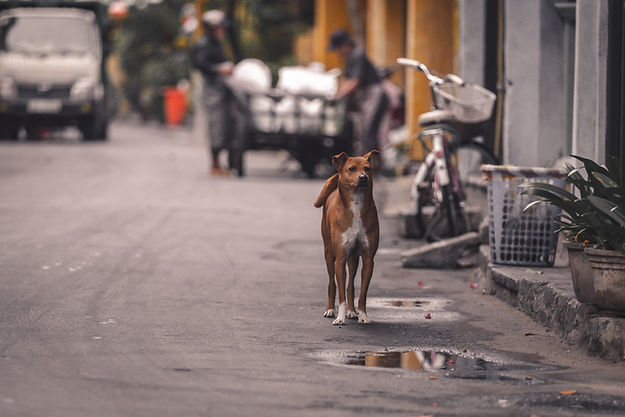
India’s free-living dogs are not strays. They are indigenous, free-living urban citizens shaped by centuries of coexistence with human settlements. Their presence is not accidental. They exist as part of the urban commons, ecological systems, and long-established patterns of cohabitation.
The Canine Citizenship Project exists to restore this clarity where fear, misinformation, and administrative overreach have displaced first principles. Coexistence is not a concession granted by residents.
It is a matter of governance, public health, & ecological responsibility.
Confinement creates Public Health Risk
Confinement does not remove risk. It concentrates it.
Recent drafts and interpretations of Animal Birth Control SOPs increasingly emphasise capture, confinement, and long-term housing of free-living dogs. Large-scale confinement of free-living dogs transforms a dispersed urban population into a high-density biological system. When animals are captured, transported, and housed together for prolonged periods, pathogens that would otherwise remain localised are amplified, circulated, and sustained.
High density, repeated intake, inadequate ventilation, stress-induced immune suppression, and frequent human contact create ideal conditions for zoonotic transmission. Without strict biosecurity, independent audits, and time-bound confinement limits, shelters function less as control mechanisms and more as disease reservoirs.
This is not a question of intent or care. It is a question of system design. Any model that relies on mass confinement must demonstrate how it prevents pathogen amplification, protects workers and surrounding communities, and avoids long-term public health exposure.